

 Facebook
 X
X
 Pinterest
 Copy Link
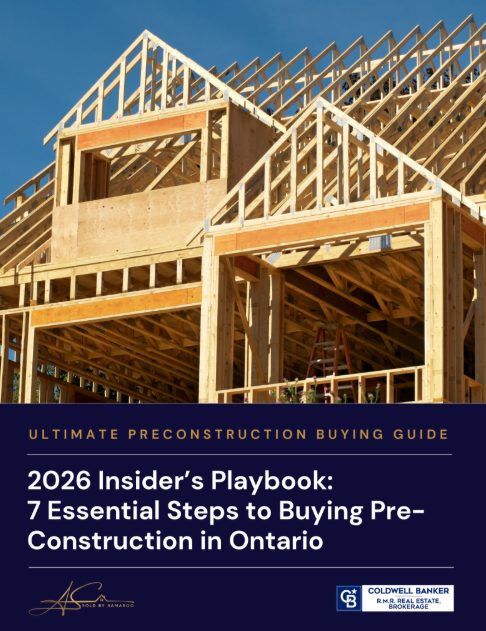
Navigating the Ontario real-estate market requires a modern playbook, especially with the consumer protection updates that took effect in January 2026. This guide breaks down the essential steps to successfully purchasing a new-build home or condo.
Step 1. Run Your Affordability Audit
Before you browse floor plans, you must clear four critical financial hurdles:
-
Pass The “Future” Stress Test: Lenders require you to qualify at your contract rate plus 2% or a floor rate of 5.25%, whichever is higher.
-
Follow the 4.5x Income Rule: To stay safe, ensure your total mortgage does not exceed 4.5 times your gross annual household income.
-
Save for a Closing Buffer: You need 2% to 4% of the purchase price in liquid cash to cover land transfer taxes, development levies, and legal fees.
-
Avoid the HST Rebate Trap: If you are an investor, you must pay up to $24,000 out-of-pocket on closing day. You can only apply to get this back after you secure a one-year lease.
Step 2. Strategic Search and Platinum Access
Ontario developers launch projects in phases. If you wait for the public grand opening, you will likely only see the “leftovers” at higher prices.
-
Target the Platinum Stage: Platinum agents offer you the lowest prices and the best incentives, such as capped development fees and free assignment rights.
-
Submit Your Worksheet Early: We submit unit requests before the price list even comes out to put you first in line for the best units.
Step 3. Understanding the Contract and Deposits
Once you sign the paperwork, you usually have a 10-day “cooling-off” period.
-
Lawyer Review: You should always have a real estate lawyer check your contract during these 10 days to find hidden costs.
-
Deposits: Unlike buying a used home, you pay your deposit in stages—often totaling 20% over a year or two.
Step 4. Warranty and Protections
Your new home is protected by Tarion, Ontario’s warranty provider.
-
1-Year: Materials and workmanship.
-
2-Year: Water penetration and mechanical systems.
-
7-Year: Major structural defects.
Step 5. Managing Delays and Closings
Condo buyers actually have two different “closing” dates.
-
Interim Occupancy: You move in once the building is safe, but you do not own it yet. During this time, you pay the builder “occupancy fees” instead of a mortgage.
-
Claim Delay Compensation: If the builder misses a “Firm Date” for avoidable reasons, you can claim $150 per day, up to $7,500.
Step 6. Selling the Contract (Assignments)
If your plans change, you might “assign” your contract, which means selling your rights to the home to someone else before it is finished.
-
The Rules: You usually need the builder’s permission and may have to pay a fee.
-
The Taxes: Be careful, as any profit you make from an assignment sale is now taxed.
Step 7. Claim 2026 First-Time Buyer Incentives
If this is your first home, you have access to massive tax savings.
-
HST Rebates: You could save up to $130,000 in taxes if the home is priced under $1 million.
-
Savings Plans: You can now take out up to $60,000 from your RRSP tax-free to help with your down payment.
Full Guide Can Be Viewed Here: Preconstruction Guide


